![]() |
![]() |
![]() |
||||||||||||||||||||||||||||||||||||||||||||||||||
Local Geography
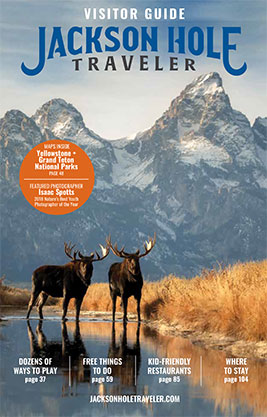
Jackson Hole is the commonly used name for the broad-based valley that lies at 6,200 feet between two mountain ranges: the Tetons to the west and the Gros Ventres to the east. Bisected by the Snake River, the valley ascends gently to the north meeting the volcanic uplift of Yellowstone National Park. |
||||||||||||||||||||||||||||||||||||||||||||||||||||
|
Area Ranges, Canyons and Passes Jackson Hole is surrounded by several mountain ranges: the Teton Range to the west, the Snake River range to the southwest, the Gros Ventres (pronounced "Grow Vawnts") to the east and the North Winds and Yellowstone to the north. Teton Mountain Range When people hear about Jackson Hole, the range that first comes to mind is the Tetons. One of America's youngest ranges, the Tetons boast a dramatic collection of steep and jagged peaks. With no foothills on the eastern side of the range, the peaks appear all the more breathtaking. They look and feel overwhelmingly close. Snake River Canyon To the south, the valley ends abruptly at the northern end of the Snake River canyon. The canyon starts about 10 miles south of town. This is where most of the valley’s whitewater rafting activity is concentrated. On warm summer days, literally thousands of vacationers escape the summer heat floating along the Snake River as it passes between the Snake River and Grey's River Ranges. Teton Range/Snake River Range and Teton Pass Dividing the Snake River range and the Teton Mountain ranges, Teton Pass is the main highway into Teton Valley, Idaho, which includes the communities of Driggs and Victor plus Grand Targhee ski resort. Teton Pass is a backcountry skiing mecca. A short hike from the summit parking lot can reveal untapped powder stashes, even days or weeks after the last storm. Gros Ventre Mountains The Gros Ventre Mountain range is much older, wider and more rolling than the Teton range. It has great expanses of wilderness where one might not cross the road for dozens of miles. The Sleeping Indian on top of Sheep Mountain watches over Jackson Hole and the National Elk Refuge. Cache Creek Canyon Located in the southern region of the Gros Ventres, Cache Creek offers Jackson residents immediate access to great hiking, cross country skiing, and mountain biking. Starting literally at the edge of town, Cache Creek travels up into the Gros Ventres connecting with several creek drainages. Farther up Cache Creek lies Jackson Peak which overlooks town and is a popular destination for spring skiing. Togwotee Pass Togwotee Pass bisects the Northern Winds and Gros Ventre Mountain Ranges. A long wide climb takes one up to a high plateau (over 10,000 feet) of open meadows and glades renowned by snowmobilers the world over. To the east lies the tiny town of Dubois and the warmer, drier climate of West-Central Wyoming. Towns in Jackson Hole Town of Jackson The Town of Jackson (not Jackson Hole) is situated on the eastern edge of the valley near its southern end. The first homesteaders lived directly across the valley below the pass they used to enter the valley. But some of them soon moved across the valley’s floor when they noticed that there was less snowfall and milder winter temperatures on the site of today’s town. Wilson At the base of Teton Pass, Wilson, Wyoming and the surrounding area is the wealthiest zip code in the U.S. Despite this fact, there is a great bar, the Stagecoach, one of the most unique trading posts, Hungry Jack's, and lots of funky charm. Wilson was the original settlement in Jackson Hole, until settlers realized the snow was shallower at the present location of Jackson. Kelly A tiny hamlet at the base of the Gros Ventres, along the Gros Ventre River, Kelly offers the most spectacular views of Tetons to be seen. It is an eclectic village of hippies, park employees, second home owners, and ranchers. Moose Aptly named, Moose is twelve miles from Jackson. It is the southern entrance for Grand Teton National Park and the site of the Park's Visitor Center. To the north of Moose, the Snake River runs in a shallow canyon between alluvial plains, formed by the deposits and smoothing effects of glaciers. Moran 30 mile north of Jackson, Moran is a small community of park employees at the junction of Highways 89 and US 26, 287. Here the road turns east towards Togwotee or north towards Yellowstone and Jackson Lake. Also nearby is the outlet where the Snake River leaves the confines of Jackson Lake and continues down through Jackson Hole. Flagg Ranch 55 mile from town and the southern entrance to Yellowstone, Flagg Ranch is the last stop for summer and winter enthusiasts before beginning the climb into Yellowstone Country. Hoback Junction About 18 miles south of Jackson, Hoback offers gas, food and a little lodging. Hwy. 89 heads to the right (traveling south) downstream along the Snake River to the southwest toward Evanston, Wyoming and Salt Lake City. Hwy. 191 heads upstream (and left) along the Hoback River southeast toward Pinedale, the Wind River Mountains and Rock Springs. Travel Points of Interest Airport 10 miles north of town lies the airport, the only municipal airport within a national park. While flying in to Jackson can be a bit expensive, if you land on a clear day the views are incredible and worth the extra expence. In the springtime, early in the morning, bird lovers visit the runway to watch the mating rituals of the strutting sage grouse males as they seek to impress their ladies by prancing on the runway tarmac. The National Parks & Forests Yellowstone National ParkSeventy miles north of Jackson lies the southern gateway to Yellowstone National Park, the world's first national park. Yellowstone country has a largely volcanic origin, the result of gigantic explosive forces swelling up from the depths of the earth's core. Grand Teton National Park After decades of wrangling Grand Teton National Park was established by an act of Congress. Since its original establishment, the park has almost doubled in size to encompass much of the valley floor through the efforts of John D. Rockefeller. Forged by tectonic uplift and glaciation, the Teton range and valley floor show us the geographic history of this area. Bisected by the Snake River, the valley ascends as one moves north in the Park until it strike the volcanic plateau of Yellowstone. National Elk Refuge Highway 89, the only major road to the north, leaves town quickly behind, passing along the southern edge of the National Elk Refuge, a 25,000 acre reserve created in 1912. The Refuge is home to the world’s largest elk herd during the winter months, usually numbering between 7,000 and 11,000 animals. |
|
|
|
||||||||
|
|
|
||||||
| site map | yellowstone park | west yellowstone | ||||||||||||||||||||||||||
![]() |
||||||||||||||||||||||||||
|
![]() |
|
||||||||||||||||||||||||
|
|
|